What Documents Do You Need to Prove Canadian Citizenship by Descent?
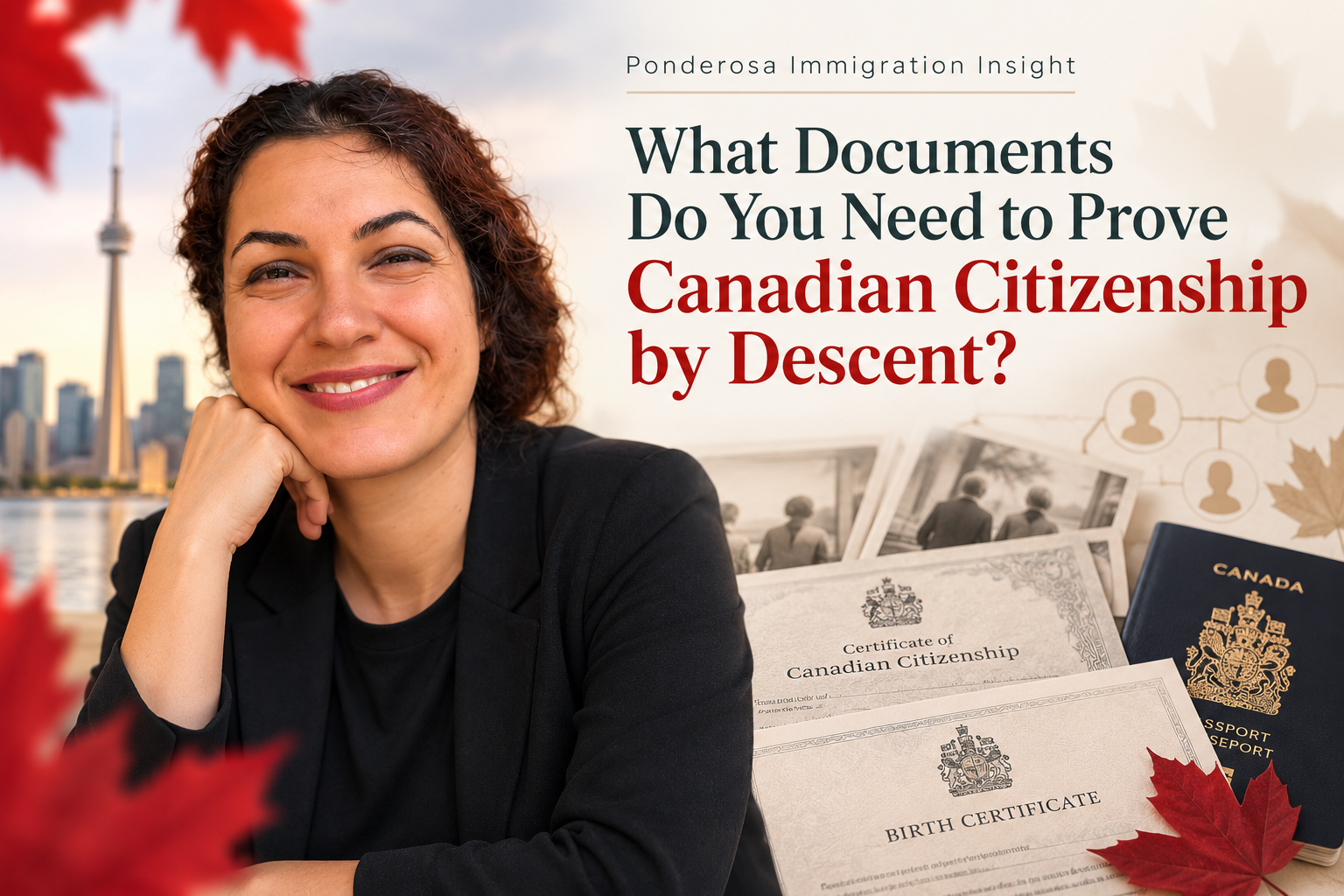

To apply for citizenship by descent, you need to obtain the proper documents. First, you need to prove that your ancestor was Canadian, either by birth in Canada or through naturalization. Second, you need to ensure that you have the proper documents to prove the parent-child relationship for every generation from your Canadian ancestor to you.
What documents are acceptable?
Usually, you start with yourself and work backward until you reach your Canadian ancestor. Certified long-form birth certificates that show your name and your parents’ names are the most suitable documents.
Often, the problem arises with the anchor ancestor (the Canadian ancestor), particularly when official birth certificates were not available. In these cases, alternative documents may include hospital and birth records, baptismal certificates or records, and Canadian or foreign census records.
When the ancestor was naturalized, naturalization certificates issued in Canada or Newfoundland and Labrador are strong proof.
As the Citizenship Act first came into effect in 1947, for individuals who were born or lived in Canada before that date, proof of British subject status, landed immigrant status, or naturalization records may be acceptable.
Note that all supporting documents must be issued by the original authorities, not obtained from generalized genealogical websites.
Free 15-Minute Discovery Call
Not Sure Which Records You Need?
We can review your family line, key dates and the documents you already have to identify which records may be needed for your citizenship assessment.
What issue may arise in the process of genealogical search? And what could be the remedy?
One issue that may arise in genealogical searches is name variations, which can make both the search and proving the relationship challenging.
When a record is missing, it does not always mean that you are unable to pursue your claim. In some cases, proof that you conducted searches but could not locate the relevant document, together with other supporting documents, may be acceptable.
Free 15-Minute Discovery Call
Have Gaps or Name Variations in Your Family Records?
We can review the records you have and identify the document gaps that may need to be addressed before you move forward.
Reviewed by: Pooneh Ghasvareh, RCIC (R1040420)
Last reviewed: October 6, 2026